
Anxiety After a Heart Attack: Why It Happens, What’s Normal, and How to Get Your Life Back
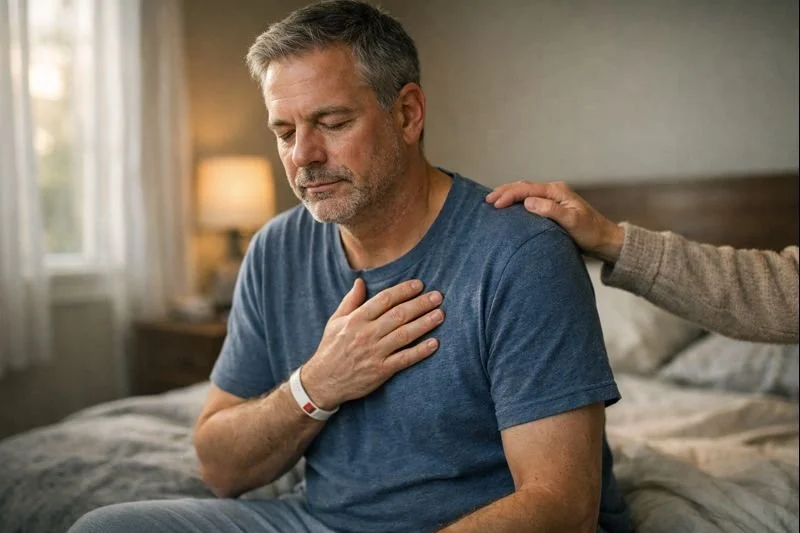
A heart attack doesn’t just hit your heart. It hits your sense of safety.
You can walk out of the hospital “fixed” on paper—stent placed, meds started, numbers improving—yet feel like your body has become a ticking clock. Every chest twinge, skipped beat, or short breath can feel like the beginning of the end. If you already lived with anxiety before your heart attack, this can feel like anxiety just found the perfect weapon: real physical sensations with a terrifying story attached.
If that’s you, I want you to hear this clearly: you’re not weak, you’re not “going crazy,” and you’re not alone.
The American Heart Association has emphasized that psychological distress after a heart attack is common—often including anxiety, depression, stress, and even post-traumatic stress symptoms—and it can affect recovery if it goes unrecognized or untreated. AHA Journals+1
This post is long on purpose. Anxiety after a heart attack is not a “quick tips” problem. It’s a whole-body, whole-life experience. My goal is to give you both understanding and practical tools—so you can feel safer in your body again.
Important note: This is educational information, not medical advice. If you think you might be having a heart attack, call emergency services right away.

Why anxiety after a heart attack is so intense (and so common)
1) Your brain learned a brutal lesson
A heart attack is a life-threatening event. The brain responds to life threats by becoming hyper-alert to anything that might signal danger again.
That hyper-alert state can look like:
constant body scanning (pulse, breathing, chest sensations)
fear of exertion (stairs, walking, sex, even laughing too hard)
“what if” spirals (What if it happens again? What if I’m alone? What if I miss the signs?)
avoidance (skipping activity, rehab, social events, travel)
The AHA scientific statement describes how post–myocardial infarction psychological distress can include anxiety and “cardiac anxiety”—a fear centered on heart sensations and the possibility of another event. AHA Journals+1
2) Your body is primed for “fight or flight”
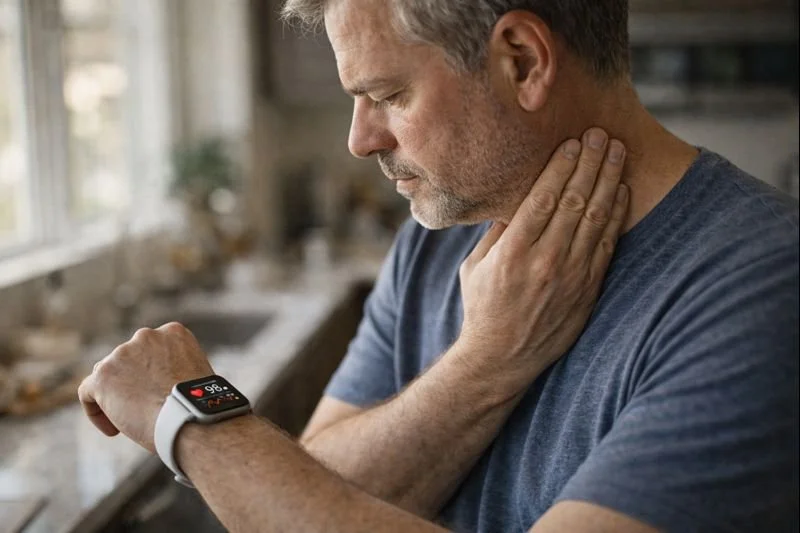
After a cardiac event, your nervous system may stay stuck in a stress response:
adrenaline surges
faster heart rate
shallow breathing
muscle tension
lightheadedness
GI symptoms (nausea, tight stomach)
Unfortunately, those stress sensations can feel exactly like the symptoms you fear—so anxiety feeds itself.
3) Fear of recurrence is its own thing
Research suggests fear of another heart attack can be a major ongoing stressor and may need to be assessed and addressed directly—not just lumped under “depression/anxiety.” American Heart Association
4) Trauma symptoms can show up
Some people develop PTSD symptoms after acute coronary events. A classic meta-analysis found clinically significant PTSD symptoms in a meaningful subset of patients (estimates vary depending on how it’s measured). PubMed
And newer AHA guidance continues to highlight PTSD as part of post-heart-attack psychological distress. AHA Journals
What’s “normal” fear vs. anxiety that needs attention?
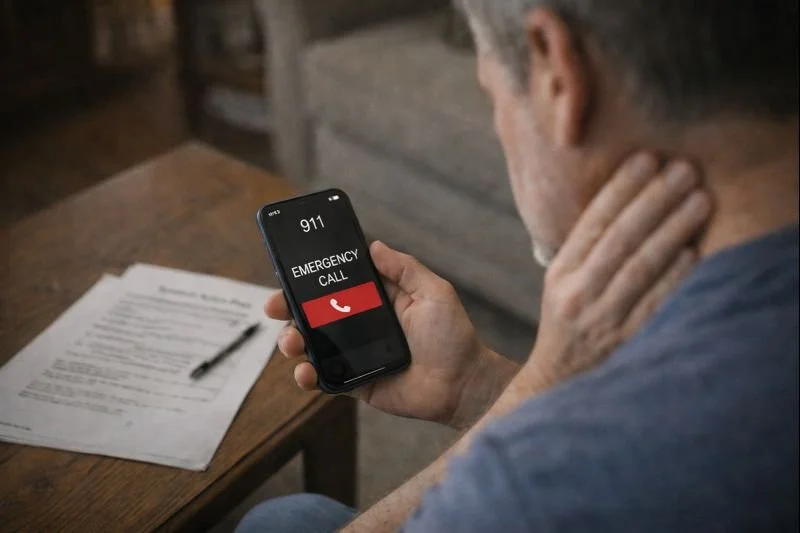
A certain amount of fear after a heart attack is a human response. But anxiety becomes a problem when it starts shrinking your life.
Here are signs it’s time to treat anxiety like a real part of recovery (because it is):
You avoid activity your doctor cleared (walking, rehab, stairs)
You repeatedly seek reassurance (checking pulse/BP dozens of times, repeated ER visits “just to be sure”)
Panic attacks (sudden terror + intense physical symptoms)
Sleep is consistently poor (difficulty falling asleep, waking in fear)
You feel stuck in “impending doom”
You feel detached, numb, or unreal
You replay the event constantly, have nightmares, or avoid reminders (hospital, ambulance sounds, certain places)
Depression symptoms (hopelessness, loss of pleasure) are present too
The AHA statement notes that persistent psychological distress can affect health behaviors, rehab participation, medication adherence, and overall recovery. American Heart Association+1
A safety anchor: when to treat symptoms as an emergency
One of the hardest parts of post-heart-attack anxiety is this question:
“Is this anxiety… or is this my heart?”
Here’s the rule that keeps you safe:
If you have possible heart attack symptoms, treat it like an emergency.
The American Heart Association lists warning signs such as chest discomfort, discomfort in upper body areas (arm/back/neck/jaw/stomach), shortness of breath, cold sweat, nausea, or lightheadedness. www.heart.org+1
And they strongly emphasize calling emergency services rather than trying to drive yourself when symptoms suggest a heart attack. www.heart.org
Build a “When I Should Call” plan with your cardiology team
This is one of the most anxiety-reducing things you can do:
what symptoms are expected during recovery?
what should trigger a call to the clinic?
what should trigger a call to emergency services?
do you have nitroglycerin? when exactly should you use it (if prescribed)?
what’s your plan if symptoms happen when you’re alone?
Having your doctor’s personalized guidelines reduces the uncertainty that fuels panic.
The recovery paradox: avoiding fear keeps fear alive
Anxiety’s favorite strategy is avoidance:
“Don’t walk too far.”
“Don’t get your heart rate up.”
“Don’t travel.”
“Don’t be alone.”
“Don’t think about it.”
Avoidance works in the short term… and backfires long term.
It teaches your brain: “That was dangerous. You survived because you avoided it.”
So the fear grows—and your world gets smaller.
This is why the most effective anxiety treatments gently reverse avoidance through graded exposure (more on that soon), often as part of CBT-style approaches—especially for cardiac anxiety. PubMed+1
The most powerful “foundation” treatment: Cardiac rehab
If you take nothing else from this post, take this:
Cardiac rehabilitation is not just physical recovery—it’s emotional recovery too.
Cardiac rehab typically includes supervised exercise training, education, and emotional support. Mayo Clinic
The AHA describes cardiac rehab as a core component of recovery that improves outcomes and quality of life. AHA Journals
And research reviews have found participation is associated with reductions in anxiety and depression, alongside other health improvements. PMC+1
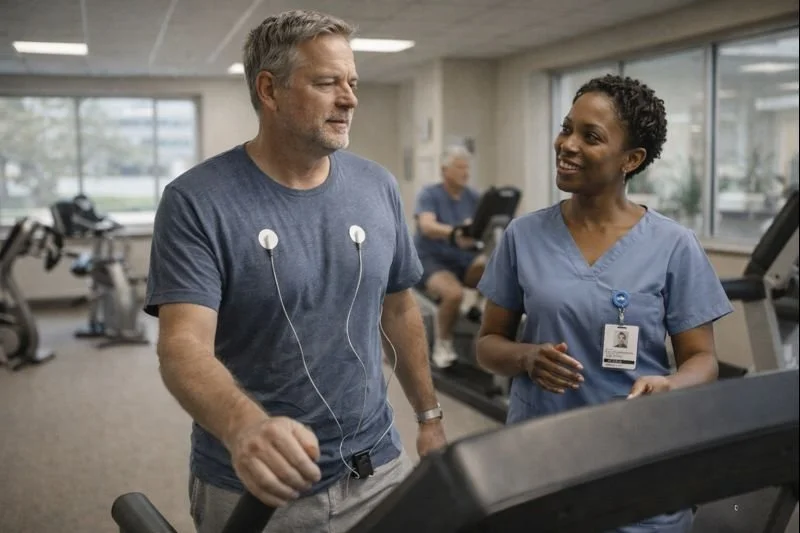
Why rehab helps anxiety so much
Rehab does something anxiety cannot do on its own:
It gives you safe exposure to exertion
It helps you relearn “my body can handle this”
It gives you real-time feedback and professional monitoring
It reduces the fear of heart sensations by normalizing them in a controlled environment
If you’re avoiding rehab because you’re afraid, that’s not a character flaw—it’s a symptom. And it’s exactly why rehab can be life-changing.
Therapy that actually works (especially after cardiac events)
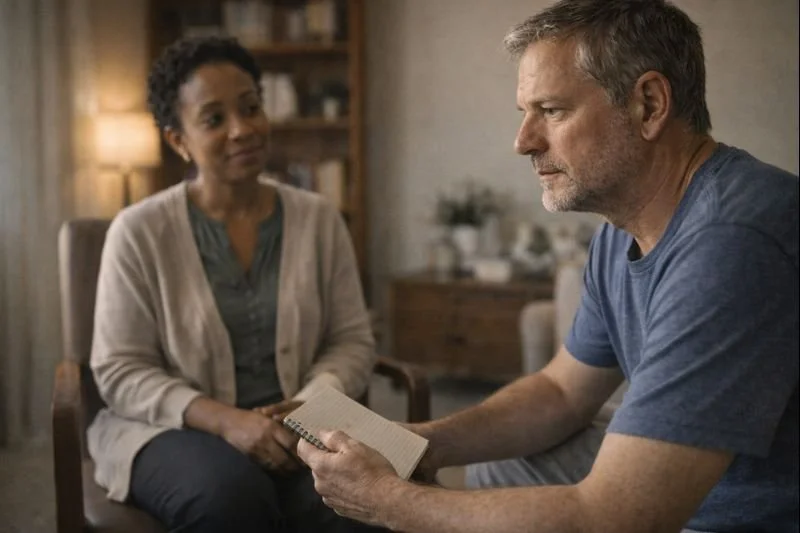
1) CBT (Cognitive Behavioral Therapy)
CBT is widely used for anxiety and panic because it targets:
catastrophic thinking (“This flutter means I’m dying”)
safety behaviors (constant checking, reassurance seeking)
avoidance
panic cycles
The AHA includes CBT among evidence-based options discussed for post-heart-attack psychological distress. American Heart Association+1
A key point: For heart-related anxiety, the CBT that helps most often includes exposure—learning to tolerate safe body sensations and safe activity again. Newer work specifically targeting “cardiac anxiety” after MI has explored exposure-based CBT protocols with promising early results. PubMed+1
2) Metacognitive Therapy (MCT)
MCT is a therapy approach that focuses less on what you think and more on how you relate to worry and rumination. In research covered by the AHA, adding MCT to cardiac rehab has been explored as a way to reduce anxiety and depression in cardiac patients. www.heart.org
3) Trauma-focused therapy (when PTSD symptoms show up)
If you’re having intrusive memories, nightmares, or strong avoidance related to the event, trauma-focused treatment can help.
A meta-analysis of ACS-induced PTSD symptoms highlights that PTSD can follow cardiac events in some patients. PubMed
For medical-event–related PTSD symptoms, reviews suggest approaches like CBT and EMDR may be promising, though more trials are still needed in this specific population. PMC+1
Bottom line: If your heart attack lives in your nervous system like a trauma memory, treating it like trauma is reasonable—and often effective.
Medication options: what many heart patients don’t get told

Some people need therapy, lifestyle tools, and medication—especially if anxiety existed before the heart attack, or if panic is frequent and disabling.
Selective serotonin reuptake inhibitors (SSRIs) are commonly used for anxiety/depression and are often considered appropriate in people with coronary heart disease, with certain choices preferred. SPS - Specialist Pharmacy Service+1
UK guidance sources frequently list sertraline as a first-line option in coronary heart disease, with alternatives depending on the person. SPS - Specialist Pharmacy Service
The British Heart Foundation similarly notes sertraline is commonly recommended, while some medications (like higher doses of citalopram/escitalopram) may require monitoring because of heart rhythm considerations. British Heart Foundation
This is not “take this pill” advice. It’s permission to have a real conversation with your cardiologist/primary care clinician/psychiatrist about options—because untreated anxiety can sabotage rehab, sleep, and adherence.
The anxiety toolkit: what to do when fear hits your chest
Let’s get practical. Here are tools that real humans use in real moments.
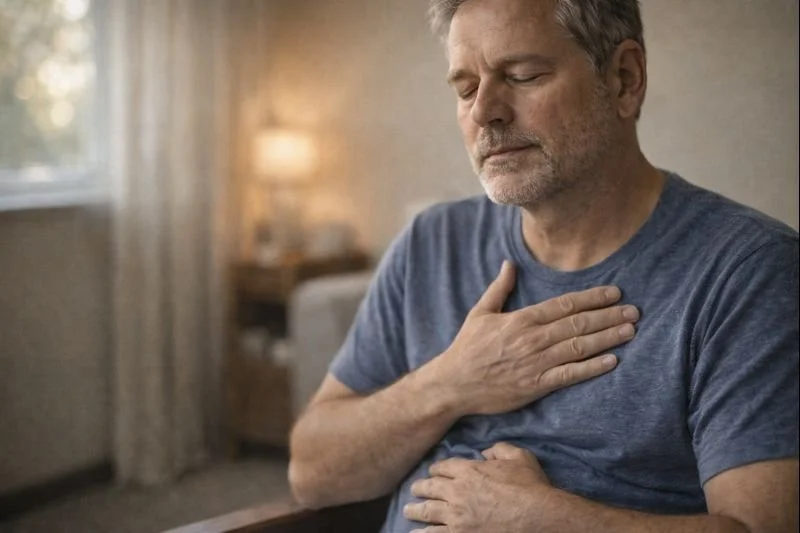
A) The “60-Second Reset” (for panic spikes)
Put one hand on your chest, one on your belly.
Breathe in through your nose for 4
Hold gently for 2
Exhale slowly for 6
Repeat for 6–8 cycles.
Why it works: longer exhales help shift your nervous system out of “alarm.”
This won’t solve everything—but it can stop the panic surge from turning into a full spiral.
B) The “Name it to tame it” script
When a symptom hits:
“My body is having a stress response.”
“This sensation is uncomfortable, not automatically dangerous.”
“I can take the next wise step.”
Your brain needs a calm narrator when the fear narrator gets loud.
C) Stop the “checking trap” (without being reckless)
Checking your pulse/BP can be useful when it’s scheduled and purposeful—and harmful when it becomes compulsive reassurance.
Try this:
choose 2 check-in times per day (example: morning and evening)
check once, record it, move on
outside those times, if the urge hits: do a 2-minute breathing cycle first, then decide
This reduces anxiety without ignoring your health.
D) The “panic loop” breaker (especially if you had anxiety before)
Panic often follows this loop:
Sensation → 2) Catastrophic meaning → 3) Fear → 4) More adrenaline → 5) Bigger sensations → 6) “Proof” → repeat
Your job is to interrupt Step 2: meaning.
Ask:
“What else could this be?”
“If my best friend felt this, what would I tell them?”
“What did my doctor say is expected during recovery?”
E) A simple CBT thought record (5 minutes)

Write:
Situation: “Walking; heart rate rose”
Automatic thought: “This is dangerous”
Feelings: fear 9/10
Evidence for: “My chest feels tight”
Evidence against: “Rehab cleared me; it passed before; no other red flags”
Balanced thought: “My heart rate rising with walking is expected; I’ll slow down, breathe, and follow my plan.”
This is how you retrain your brain—one repetition at a time.
Re-learning exertion: the graded exposure “ladder”

Avoidance makes your life smaller. Exposure makes it bigger again—safely.
Make a ladder like this (example only; use your medical clearance):
Level 1: Walk 3 minutes on flat ground
Level 2: Walk 5 minutes
Level 3: Walk 8 minutes
Level 4: Walk 10 minutes
Level 5: Gentle incline / one flight of stairs
Level 6: Longer walk, mild pace increase
Level 7: Return to hobbies that raise your heart rate modestly
Rules:
don’t jump 5 steps ahead
repeat a level until your anxiety drops at least a little
celebrate completion, not perfection
bring this ladder to cardiac rehab or your clinician for tailoring
This principle aligns with CBT approaches designed to reduce cardiac anxiety after MI. PubMed+1
Sleep: the hidden anxiety amplifier
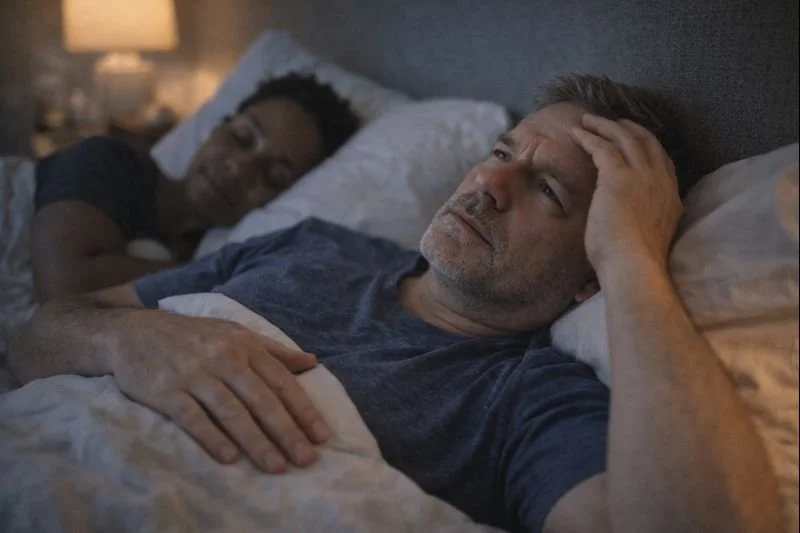
If you want anxiety to calm down, sleep cannot be an afterthought.
A few heart-attack-specific realities:
Nighttime is when people ruminate (“What if I don’t wake up?”)
Body sensations are louder in silence
Poor sleep increases threat sensitivity and makes panic more likely
Try a 3-part sleep plan:
A wind-down routine (same 30 minutes nightly: dim lights, calm music, no doom scrolling)
A “worry dump” page (write fears earlier in the evening so they don’t run wild in bed)
If you can’t sleep after ~20 minutes: get up briefly, do something boring and gentle, then return
If insomnia is persistent, CBT-I (CBT for insomnia) is highly effective and worth asking about.
The social side: why anxiety isolates you (and what to do about it)

After a heart attack, many people feel:
“No one gets it.”
“I don’t want to scare my family.”
“If I say it out loud, it becomes real.”
But isolation is gasoline on anxiety.
Two practical moves:
Choose one safe person and share a simple sentence:
“I’m recovering physically, but anxiety has been a real part of it.”Join a structured support environment (cardiac rehab groups, therapist-led groups, or a survivor community)
Mayo Clinic also encourages emotional support and support groups as part of coping after a heart attack, and notes cardiac rehab can help address emotional recovery. Mayo Clinic+1
If you had anxiety before the heart attack
Pre-existing anxiety often means your brain already has a well-worn fear pathway. The heart attack can “validate” fears that used to feel hypothetical.
If this is you, please don’t aim for “never anxious again.” Aim for:
fewer spirals
faster recovery after a spike
less avoidance
more confidence in your plan
A heart attack adds a new layer, but it doesn’t erase your ability to heal. You may simply need a more structured approach—therapy + exposure + (sometimes) medication.
When you should get extra help immediately
Please seek urgent professional support if:
you’re having thoughts of harming yourself
you feel hopeless or trapped
you can’t function day-to-day
panic is frequent and you’re avoiding life
nightmares/flashbacks are persistent
In the U.S., you can call or text 988 for the Suicide & Crisis Lifeline.
A simple 30-day “Calm + Confidence” recovery plan
Week 1: Safety + structure
Ask your clinician for a symptom action plan
Set two daily check-in times (no constant checking)
Start the 60-second reset practice twice daily (even when calm)
Week 2: Rebuild trust through movement
Start cardiac rehab (or ask for referral)
Build a graded exposure ladder and do Level 1–2 repeatedly
Week 3: Retrain the fear brain
Do 3 thought records this week
Reduce one reassurance behavior (example: fewer pulse checks)
Week 4: Expand your world
Add one social touchpoint weekly
Reintroduce one avoided activity with a plan
Consider therapy (CBT/MCT/trauma-focused) if symptoms persist
This isn’t about forcing bravery. It’s about rebuilding safety—piece by piece.
Resources (evidence-based, heart-focused)
American Heart Association (AHA) — Post–Myocardial Infarction Psychological Distress scientific statement (2025). AHA Journals+1
AHA News — Psychological distress after heart attack and paths to recovery (2025). American Heart Association+1
AHA — Warning signs of a heart attack (updated 2024). www.heart.org+1
AHA — How to tell the difference between a heart attack and panic attack (2022). www.heart.org
AHA — Call 911 guidance for heart attack/stroke symptoms (2025). www.heart.org+1
Mayo Clinic — Cardiac rehabilitation overview (updated 2024). Mayo Clinic
Mayo Clinic — Heart attack: coping and support (includes rehab/support groups). Mayo Clinic
Meta-analysis — PTSD symptoms after acute coronary syndrome (Edmondson et al., 2012). PubMed+1
Systematic review (open access) — Cardiac rehab associated with reduced anxiety/depression (2025). PMC+1
AHA — Metacognitive therapy in cardiac rehab research coverage (2021). www.heart.org
Medication guidance (UK SPS) — Choosing antidepressants for coronary heart disease (2025). SPS - Specialist Pharmacy Service
British Heart Foundation — Antidepressants and heart conditions (2023). British Heart Foundation
Cardiac anxiety CBT pilots — Exposure-based CBT targeting cardiac anxiety post-MI (2025). PubMed+1
